

05Aug
Why Direct Booking Matters: How a Small Decision Can Make a Big Difference to Local Businesses
We all know the feeling. You are excited for your upcoming trip. After going down plenty


July 23rd 2004 – July 23rd 2019
On this day, 15 years ago…
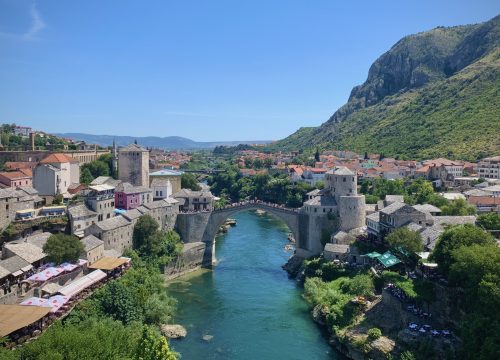
The Stari Most or, in direct English translation, “Old Bridge,” was officially opened after a long absence and extensive research and reconstruction efforts. Originally commissioned by Sultan Suleiman the Magnificent and designed and built by Mimar (Architect) Hayruddin, the Old Bridge was completed in 1566. The stone arch was and remains an undeniable testament to the potential of human ingenuity, vision, and spirit.
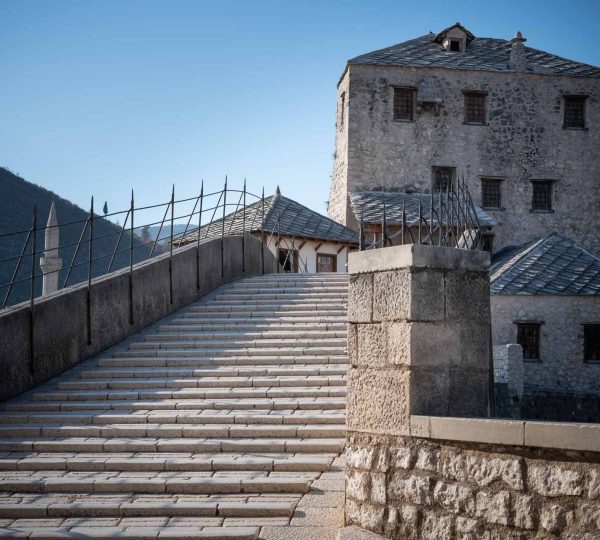
For 427 years, the Old Bridge withstood the passage of time, holding firm against changes in governance, the continued growth of the Mostar, and multiple wars. The Old Bridge served as a backdrop for Mostarians, which, in turn, bore witness to celebration and sadness, triumph and loss. Mostarians understand the Old Bridge as more than a mere functional connection between two banks of the Neretva River, but a neighbor who supported the footfalls of generations previous, the worn patina on the stone steps a physical memory of those who had passed before.
On the November 9th, 1993 – after being the central presence in a town whose very name refers to the structure and those meant to serve and protect it – the bridge was marked for destruction. Assaulted by direct bombardment from HVO forces on nearby hillsides, targeting the bridges apex – its keystone – the locally quarried stones of the Old Bridge plummeted into the water below. Witnesses say that it appeared the ruined stone arch bled that day as it collapsed into the Neretva, a result of the reddish-brown material filling the interior voids of the construction. The Old Bridge, including the beauty, strength, innovation, and history embedded within its stones, was yet another victim fallen to war and the hate, fear, and inhumanity that accompanies it.
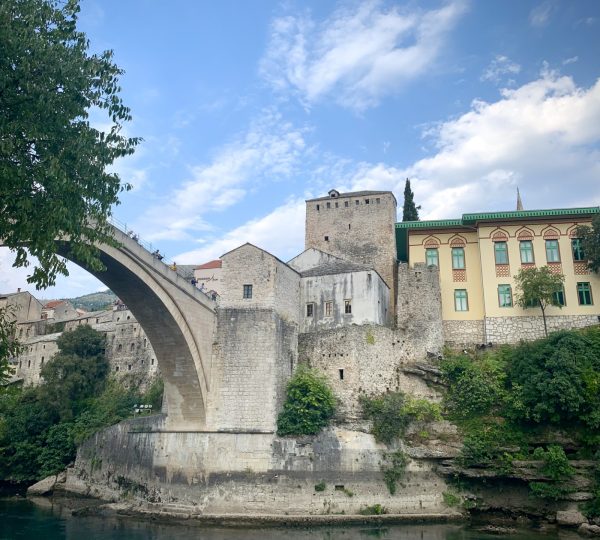
Today, we celebrate the 15th anniversary of the reconstruction of the Old Bridge, the very heart of the city of Mostar. While some might disagree, I suggest that despite being built using the same techniques and materials (including recovered original stones) of 1566, it is not the same bridge that was destroyed in 1993 and which stood as a sentry for 427 years. The Old Bridge is now, and will forever be, so much more because of the last 26 years of its and the community’s history, including its destruction, absence, and reconstruction, which are all now part of its historical narrative. The Old Bridge is today an internationally recognized example of “outstanding universal value” as described by UNESCO, which inscribed the Old Bridge and surroundings as a World Heritage Site (2005). Today, hundreds and thousands of visitors from our diverse global community travel to Mostar to visit the Old Bridge every year and, for at least a moment, stand under its gaze and become part of the community which considers the Old Bridge as neighbor. Each of these visitors contribute to the wear of the stone steps and add to the luster of their unique patina.
Those who acted as executioner to the Old Bridge were wrong in their belief that by destroying the heart of our city, they could likewise destroy the will of the people. The reconstruction of the Old Bridge and the intervening 15 years is evidence of this. Now, the bridge is not only a testament to the potential of human ingenuity, vision, and spirit, but to the resilience, determination, and heart still present (albeit challenged) within the local Mostarian community. Let the narrative of the Old Bridge – including its destruction and absence – be told to commemorate this. It must, however, also remind us of lasting impact of violence and its long-term diffusion of fear, hatred, and discrimination in society and how we must continue to actively work toward pluralistic communities espousing peace, tolerance, and equality in Mostar and well beyond.